
When We Begin to Notice Dusk Again
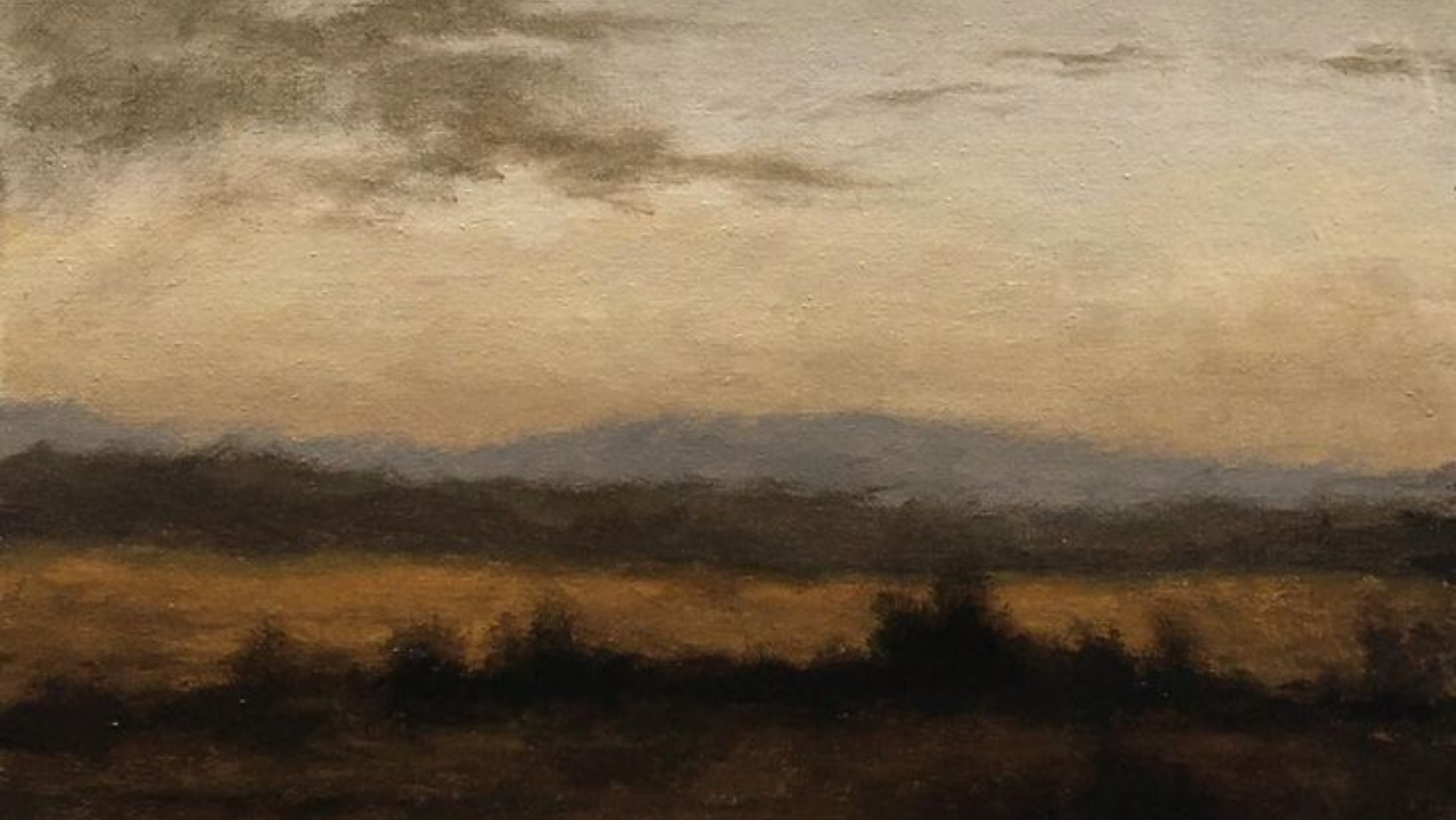
There is a particular kind of evening that belongs to August. Summer has not left us. The trees are still deeply green, gardens are overflowing, the days can still be hot, and the air is heavy with the sounds of insects. Nothing about the landscape announces autumn yet, and still, something has changed. I notice it most at dusk.
The sun slips away a little earlier than it did only a few weeks ago. Shadows stretch farther across the yard. The evening air changes against my skin. Birds make their last calls from the trees while the insects seem to take over the night shift. There is a moment when the warmth begins to lift from the day, and another when the colors quietly begin to leave the landscape. These are such small things that they are easy to miss.
Most evenings, we do miss them. We are walking the dog, watering the garden, cleaning up after dinner, answering one last email, carrying something into the house. Dusk happens around us while our attention is somewhere else. But when I actually sit outside and watch it happen, I am reminded that the body notices far more than the mind gives it credit for.
There is something that happens when we stop concentrating on one particular thing and allow our gaze to widen. We begin taking in the whole landscape at once—the sky, the edges of the trees, movement in the grasses, the temperature of the air, sounds arriving from different directions. Without deliberately trying to relax, the shoulders may drop, the jaw may loosen, and breathing may begin to change.
This is one of the simplest ideas behind somatic practice: bringing our attention away from the constant stream of thought and back toward the information arriving through the body—breath, sensation, sound, temperature, movement and light. For a few minutes, the body receives a different kind of information from the world. Nothing is chasing us. Nothing needs to be solved. We are simply sitting on the earth watching something that has happened every evening of our lives.
Quiet sensory attention can help create the conditions associated with rest and settling after stress, and our bodies are also remarkably responsive to light. As daylight fades, that changing light is one of the environmental signals our circadian system uses to recognize that daytime is ending and night is approaching. Long before clocks, phones, screens and electric lights, people experienced this gradual dimming every evening. There is something beautifully ancient about allowing ourselves to experience it again.
But in August, dusk tells us more than the time of day. It tells us where we are in the year. We have entered the Lughnasadh season, the first-harvest turn of the Wheel, and although summer is still very much alive around us, the landscape has already begun its slow movement toward what comes next. Flowers are going to seed. Fruit is ripening. Evening arrives earlier. The sounds outside our windows are changing.
None of this happens suddenly. Perhaps that is one of the things I love most about following the Wheel of the Year. The seasons rarely change on the dates we assign to them. There is no single morning when summer becomes autumn or winter becomes spring. The land changes incrementally, through hundreds of almost imperceptible shifts: a few minutes less light, a different bird overhead, the first seed head where there had been a flower, a cooler current of air after sunset. If we are paying attention, our bodies often recognize the turning before our minds do.
This is also why I sometimes think we have made our relationship with nature more complicated than it needs to be. We are so accustomed to looking for meaning that even our time outside can become another exercise in interpretation. What is nature trying to tell me? What am I harvesting? What should I release? What does this season mean for my life? There is value in those questions, but perhaps we don't always need to ask them. Sometimes we can simply sit beside the world while the light changes, with no journal, no lesson to uncover and no message required.
There is enough in simply noticing: the air cooling against our arms, the first evening creature calling from somewhere we cannot see, the trees becoming silhouettes, and that extraordinary in-between when the sky still holds light while the earth beneath it has already begun to darken. We don't have to make something of the experience for it to matter.
I wonder sometimes if this is closer to how the Wheel of the Year was once known—not primarily as something to study, but as something experienced through ordinary life. People knew where they were in the year because they felt it in the length of the day, the temperature of the evening air, what was ripening in the fields, which birds were overhead, what was flowering and what had gone to seed. The calendar was outside the door.
And perhaps beneath all the noise, schedules, screens and artificial light of modern life, our bodies have not entirely forgotten how to read it. Perhaps noticing where we are in the year doesn't require us to do anything more elaborate than occasionally being still long enough to feel the world changing around us.
August is still summer. I am in no hurry to make it autumn. But I love knowing that if I sit outside at dusk, I can feel the smallest beginnings of the turn. Not an ending yet. Not quite a beginning either. Just the earth, moving almost imperceptibly onward, and the quiet realization that we are moving with her.
~Kathleen