
Living in the Between: A Woman’s August
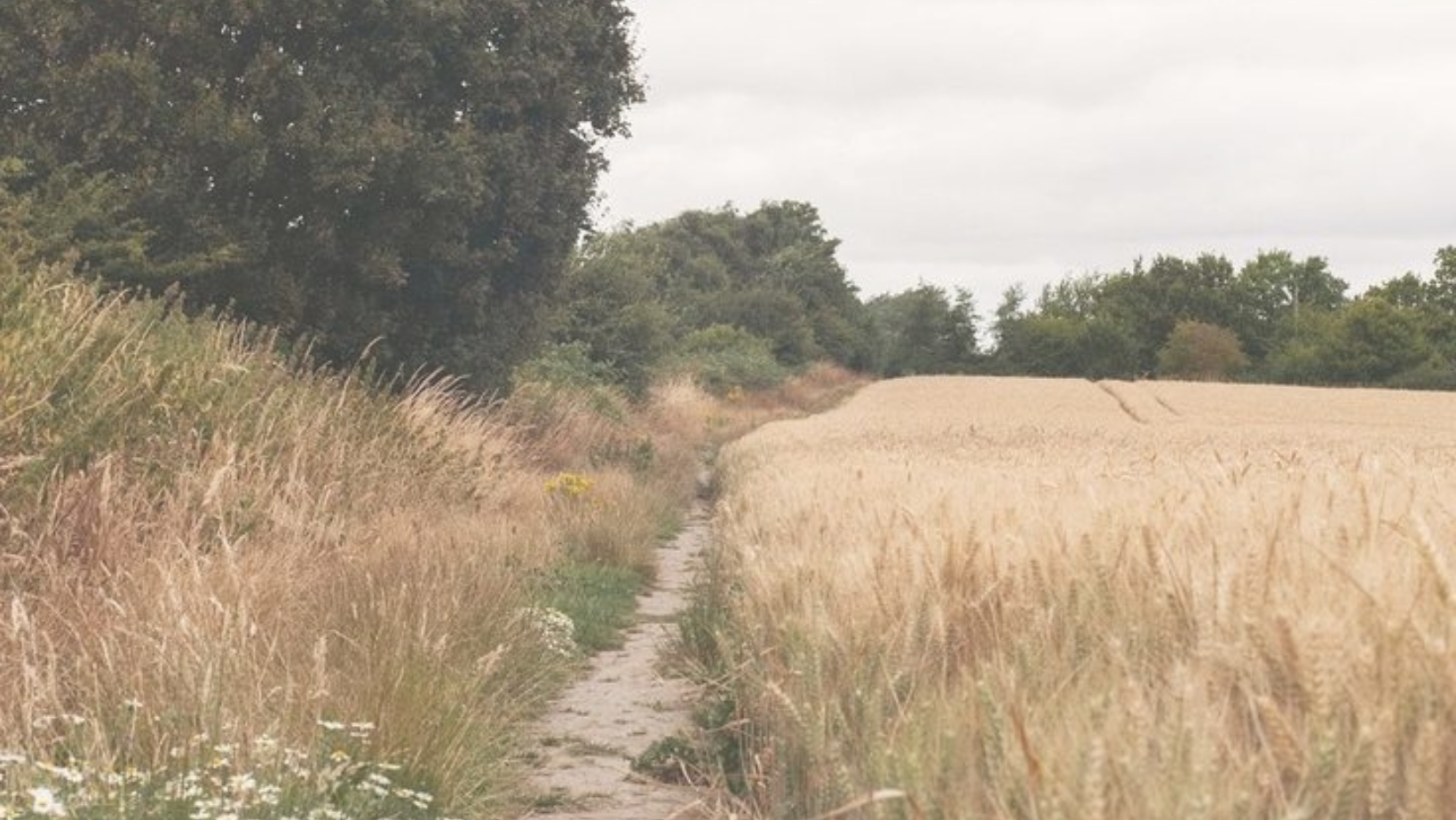
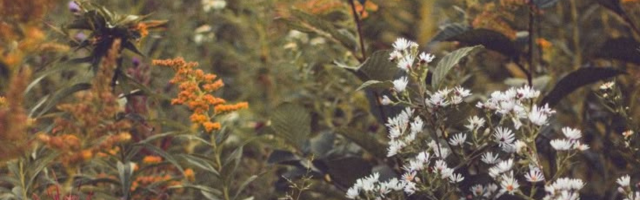
There is a moment in August when summer becomes something different, although it is difficult to say exactly when it happens. There is no morning when we wake to find that the season has turned overnight, and most of the familiar signs of summer remain around us. The trees are still deeply green, gardens are spilling over their borders, tomatoes are warm on the vine, and the afternoons can carry the same heavy heat they carried in July. Bees disappear into flowers, thunderstorms rise out of humid afternoons, and at dusk the air seems almost alive with the sound of insects. Yet beneath all of this fullness there is another current moving. The evenings are arriving a little earlier, the shadows have begun to lengthen, goldenrod is appearing along the roadsides, and flowers that seemed endless only weeks ago are quietly becoming seed.
I think we often feel this change before we consciously recognize it. Perhaps we notice that we have turned on a lamp earlier than usual, or that the morning air coming through an open window carries a coolness that was not there before. Perhaps we hear the cicadas and know instinctively that theirs is not the song of early summer. The world is still lush and abundant, but its energy has changed. The great outward reaching of May, June and July is beginning to slow, and the earth is turning her attention toward ripening, gathering and eventually returning. Summer has not left us, but autumn has begun to exist somewhere within it.
This is where August finds us: not at an ending, and certainly not at a beginning, but somewhere between the two. We are standing in a season that contains both fullness and diminishment, abundance and letting go, sunlight and the slow return of darkness. It is the season of Lughnasadh, the beginning of the old harvest time, but perhaps more importantly for those of us living here now, it is a season that asks us to consider what it means to live well when we ourselves are somewhere in between.
For women especially, I think there is something worth lingering over here. So much of our lives cannot be neatly divided into beginnings and endings. We can be grateful for the life we have built and still feel something within us asking for change. We can love people deeply and understand that a relationship must take another form. We can mourn who we once were while becoming curious about who we are becoming. We can feel rooted and restless, content and longing, tired and hopeful, sometimes within the same afternoon. The natural world does not regard these things as contradictions. August certainly does not. She simply holds them together.
The Season Lughnasadh Opens
Lughnasadh, traditionally associated with the beginning of August, was one of the four major seasonal festivals of the Gaelic year, alongside Samhain, Imbolc and Beltane. Historical and folkloric sources connect it with the opening of the harvest season and with large gatherings that could include feasting, games, trading, matchmaking, pilgrimage and the gathering of the first fruits of the land.[1] Medieval Irish tradition also connects Lughnasadh with the god Lugh and with Tailtiu, his foster mother, whose death after clearing the land for agriculture was commemorated through an assembly and funeral games.[2] As with so many old seasonal traditions, the history is layered, regional and far less tidy than modern retellings sometimes suggest. There was no single “Celtic” observance practiced identically everywhere, and customs changed across centuries and landscapes.[3]
What interests me most is not reconstructing a perfect ancient celebration. It is the idea beneath it: this was the beginning of harvest, not its completion. The first grain could be cut while other crops still needed weeks in the fields. Fruit might be swelling on the trees but not yet ready to pick. The land was beginning to give back what had been planted and tended, but there was still uncertainty ahead. Weather mattered. Timing mattered. The work was not finished simply because the first harvest had begun.
There is something wonderfully forgiving in that idea, particularly when we turn it toward our own lives. The first harvest was never expected to be the whole harvest. Everything did not need to ripen at once.
We live in a culture that rarely offers women that same generosity. There is an almost invisible timetable running beneath our lives, telling us where we should be by now. We should have figured something out, made the decision, healed the wound, finished the project, become more confident, learned to rest, found the relationship, left the relationship, created the home, discovered the purpose, or somehow arrived at the woman we imagined we would eventually become. The details change as we age, but the underlying message remains remarkably consistent: surely, by now, we should be farther along.
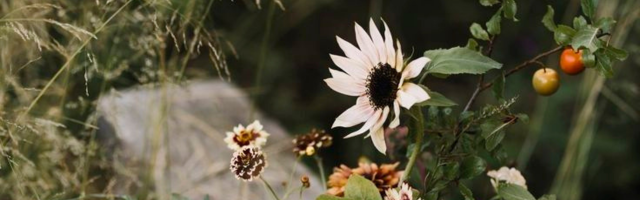
The August landscape tells another story. One field is ready while another remains green. Blackberries ripen while apples continue to swell on the branch. Some flowers are still blooming while others have already become seed. The oak is forming acorns while the meadow remains alive with bees. Nothing in the living world appears embarrassed by this unevenness. Nothing apologizes for needing another month of sun.
Perhaps we should stop apologizing for it too.
What Has Ripened in Us
If Lughnasadh is a first harvest, then August offers us an opportunity to look at our own lives differently. Not as an inventory of accomplishments, and certainly not as another occasion to measure ourselves against the expectations we carried into the year, but as a quieter reckoning with what has actually grown.
Think back to the woman you were in January. She stood at the bare edge of another year without knowing what was coming. Perhaps she had plans. Perhaps she had chosen a word for the year or written intentions into a new journal. Perhaps she was hopeful, grieving, exhausted, excited or simply relieved to have made it through the holidays. Whatever she imagined for the months ahead, she could not have known the conversations that would change her, the disappointments that would redirect her, the people who would move closer or farther away, the unexpected invitations she would accept, or the things she would discover she could no longer tolerate.
Now August has brought her here, and before we begin deciding what the remaining months of the year must become, there is value in turning around and looking at the ground already traveled. Not to ask whether we have done enough, but to notice what has ripened quietly within us. Perhaps we trust ourselves more than we did in winter. Perhaps we have become less willing to explain every decision. Perhaps we finally understand that rest is not something granted to us after every other person has been cared for. Perhaps we returned to something we once loved, made a new friend, began walking in the mornings, planted herbs outside the kitchen door, started reading before bed again, or simply learned that our days feel different when we spend ten quiet minutes outside before the rest of the world begins asking things of us.
These things may appear insignificant when measured against the usual language of achievement, but a woman’s harvest is not always visible from the outside. Sometimes the harvest is a boundary she finally held. Sometimes it is the courage to leave something that has been diminishing her. Sometimes it is choosing to remain when leaving would have been easier. Sometimes it is discovering that she no longer wants the thing she spent years believing she should want. Sometimes the harvest is simply the moment she recognizes that she is no longer willing to abandon herself in order to keep everyone else comfortable.
We change in ways that rarely announce themselves. There is seldom a trumpet sounding on the morning we become braver. More often, courage grows through a hundred ordinary moments until one day we realize that something which once frightened us no longer has the same hold. We learn to trust ourselves through small decisions. We learn our limits by crossing them too many times. We learn what nourishes us partly by discovering what leaves us depleted. Eventually we look up and realize that somewhere along the way, almost without noticing, we have become different.
August is a beautiful time to honor that kind of harvest.
The Things That Did Not Grow
There is another side to harvest, however, and any honest relationship with the land requires us to acknowledge it. Not everything we plant grows.
A gardener knows this without needing to make it into a personal tragedy. Seeds fail to germinate. Tender shoots disappear overnight. Too much rain comes, or not enough. A plant grows enormous and green but produces almost nothing. Birds reach the berries before we do. A late frost takes blossoms that would have become fruit. We can prepare the soil, tend carefully and pay attention, and still find ourselves standing before something that did not become what we hoped.
Yet when the same thing happens in our lives, women can be astonishingly unkind to themselves. We do not simply grieve what did not happen; we often turn the absence into evidence against ourselves. We wonder what we did wrong, why someone else managed it, whether we should have worked harder, spoken sooner, waited longer or known better. We compare our field to the one beside us without knowing anything about its soil, its weather or what it cost the person tending it.
Perhaps August can offer us another way.
By this point in the year, there may be things we genuinely believed would have happened by now. A relationship may not have become what we hoped. A project may still be unfinished. A friendship may have changed. The home, journey, opportunity or new beginning we imagined in winter may never have arrived. We may still be carrying a question we were certain would have an answer by summer.
There is no need to cover these things with forced gratitude. We do not have to turn every disappointment immediately into wisdom or insist that everything happens for a reason. Some losses are simply painful. Some plans fail. Some seeds do not grow.
The land allows this truth to exist beside abundance, and so can we.
Perhaps the more useful question is whether something truly failed or whether it simply needs more time. This is where the wisdom of first harvest becomes particularly important. August does not empty the fields. There are apples that need September. There are pumpkins still growing beneath enormous leaves. There are roots deepening underground while very little appears to be happening above them. Something unfinished is not necessarily something failing, and something uncertain is not necessarily something wrong.
There are seasons when our work is simply to remain close enough to ourselves to recognize what is still alive.
Ripening Has Its Own Time
We can create conditions for ripening, but we cannot command it. We can water the garden, enrich the soil, protect tender plants and pay attention to what they need, but we cannot pull open a flower or force sweetness into fruit before its time. There is a pace to the living world that exists beyond our impatience.
There are parts of a woman’s life that follow this same law. Trust cannot always be hurried. Neither can grief, confidence, belonging, forgiveness or knowing what we truly want. There are decisions we can think about endlessly without reaching clarity because the missing ingredient is not another list of advantages and disadvantages; it is time. We may need to live with a question through several ordinary weeks before we can hear our own answer beneath all the advice we have gathered.
This is difficult in a world that prizes immediate clarity. We want to know. We want the answer, the plan and the next step. Uncertainty feels like something we should solve. But August is filled with things that are not ready yet, and none of them are failing because of it.
Perhaps one of the practices of this season is learning to leave some things on the branch.
Not forever. Just until they are ripe.
The Necessary Cutting
Yet harvest contains another truth, and it is not as gentle. Eventually, something must be cut.
The golden grain we associate with Lughnasadh is beautiful precisely because it has reached the end of one stage of its life. The green stalk has dried. The seed has formed. What grew from the earth must now be severed from its roots if it is to become nourishment. Harvest is abundance, but it is also an ending. The two have always belonged together.
This is where August begins to turn our attention toward release, although we are not yet in the deep season of letting go that comes later in autumn. There is still too much life around us for that. The trees have not emptied themselves. The gardens are still producing. The swallows have not all gone. August is not asking us to strip our lives bare.
She is asking us to begin noticing what we are carrying.
There are obligations that once mattered but no longer belong to the woman we are now. There are roles we stepped into so gradually that we never stopped to ask whether we wanted them. There are relationships maintained almost entirely through our effort, traditions we continue because no one else has questioned them, and responsibilities we shoulder because everyone has become accustomed to the fact that we will.
Somewhere between devotion and depletion there is a line, and women are often taught to cross it without noticing.
August can become the month in which we notice.
We do not have to make dramatic decisions. We do not have to burn everything down, clear the calendar or reinvent our lives before September. We can simply become curious about what feels heavier than it once did. We can ask whether we are carrying something because it matters or because we have forgotten that putting it down is possible.
Sometimes the beginning of release is nothing more than recognizing the weight.
The Slow Return of Darkness
Perhaps the most ancient seasonal calendar we possess is light. Long before we divided our days into digital appointments and alarms, human life was shaped by sunrise and sunset, by the lengthening and shortening of daylight and by the enormous annual journey of the sun across the sky. After the summer solstice in the Northern Hemisphere, daylight begins gradually decreasing as we move toward the autumn equinox.[4] By August, that change has become easier to feel.
What I love about this is how quietly it happens. Darkness does not return all at once. It comes back by minutes. An evening ends slightly earlier, then another, and for a while we barely notice. Then one night we reach for a lamp and realize that only a few weeks ago we would still have been sitting in daylight.
Nature changes through accumulation. One minute of darkness, one ripening berry, one seed head, one cooler morning, one yellow leaf hidden among hundreds of green ones. Nothing appears to be happening until suddenly we can see that everything has been happening.
Women often change this way too. We imagine transformation as something dramatic, but much of it happens quietly while we are making dinner, driving home, walking the dog, caring for someone, sitting beside a friend or lying awake thinking about a conversation. A small realization settles into us. Then another. We make one slightly different choice. We say no once. We rest instead of pushing through. We stop explaining something. We begin protecting an hour of our time. None of it appears large enough to call transformation.
And then one day the light falls differently.
We realize we have changed.
Learning the Shape of Enough
August also makes me think about enoughness, although not in the language of resignation. I mean enough in the way a garden understands it.
A tree does not produce infinite apples. She produces what this particular year allowed: what the rain, soil, sunlight, pollinators, temperature and her own strength could sustain. Some years the branches bow beneath fruit. Other years the harvest is smaller. Neither year makes her less of a tree.
Women are rarely offered such a generous measure. We are surrounded by the idea that a full life should always become fuller. More experiences, more achievement, more healing, more productivity, more purpose, more connection, more evidence that we have used our time well. Even our attempts to live slowly can become another project at which we are expected to succeed.
But perhaps August offers us the image of a basket rather than an endless field.
A basket has edges. It can become full.
There can be enough work for one day. Enough people around the table. Enough courage for one difficult conversation. Enough clarity to make the decision that is immediately before us rather than solving the next ten years. Enough food for supper. Enough money for what is needed. Enough flowers in the garden without needing to cut every bloom. Enough time remaining in summer to enjoy the evening we have been given.
Enough does not mean that we have stopped dreaming. It means that we occasionally allow ourselves to recognize what is already here.
There is great peace in knowing when the basket is full.
Living the Weeks Until the Equinox
The weeks between Lughnasadh and the autumn equinox are worth inhabiting as a season of their own. The equinox arrives around September 22 or 23 in the Northern Hemisphere, when the sun crosses the celestial equator and day and night come close to equal length.[5] Many contemporary Pagan traditions call the autumn equinox Mabon, although the use of Mabon as the name of an equinox festival is modern rather than an ancient Celtic practice.[6] Knowing this does not diminish the beauty of modern observance. If anything, it reminds us that humans have always continued making meaning from the turning earth.
We do not need to spend these weeks performing August correctly. Seasonal living can become surprisingly complicated when we turn it into another collection of things we are supposed to do. We do not need the right altar, the right herbs, the right ritual or an elaborate celebration on a particular date to be in relationship with the season.
We can simply begin paying attention.
At the beginning of August, we might notice what has ripened. As the month deepens, we might consider what still needs time. Later, as the evenings noticeably shorten, we may begin recognizing what we no longer wish to carry into autumn. These do not have to become formal journal prompts unless we want them to. They can simply become questions that accompany us while we walk, garden, drive, swim, make dinner or sit outside after the heat of the day has passed.
The point is not to arrive at the equinox with answers.
The point is to arrive having lived the passage.
Do Not Miss August
There is one final thing I want to remember, perhaps more than anything else: while we are contemplating harvest and change and the gradual return of darkness, August is still summer.
I do not want to spend these weeks preparing so diligently for autumn that I miss the peaches.
I want the tomatoes still warm from the garden and basil torn with my fingers. I want bare feet on grass and the sudden coolness that rises from the ground after sunset. I want windows open after a storm and the smell of rain coming through the screens. I want to sit outside at dusk and listen to the daytime birds grow quiet while the evening creatures begin. I want to notice the moon rising through leaves that are still green.
There will be time for apples.
There will be time for sweaters and fires and fallen leaves. There will be time to gather inward, to release, to prepare the house for colder nights and to walk beneath trees turning red and gold.
But not yet.
This is part of living in the between too: refusing to abandon what is still here simply because we can sense its ending.
Perhaps that is one of August’s deepest teachings for women. We do not have to rush away from a beautiful thing because we know it cannot last. We do not have to begin grieving every season before it has finished. We can understand that something is passing and still give ourselves completely to its presence.
There is courage in that kind of love.
A Woman’s August
By the time we reach the autumn equinox, the landscape will have changed, although we may struggle to remember exactly when it happened. The light will be different. The fields will be emptier. The garden will have begun giving itself back to the earth. Mornings will carry the unmistakable scent of another season arriving.
We may be different too.
Not transformed. Not finished. Not suddenly certain about everything that lies ahead.
Simply more aware of what this year has grown in us.
We may know what is ready to be gathered and what needs another season. We may have made peace with something that did not grow. We may have recognized one burden we no longer wish to carry. Perhaps we will have discovered that our lives already contain more than we had been allowing ourselves to see.
This is how I want to live August: not rushing toward autumn and not trying to hold summer still, but learning to belong to the strange, beautiful place between them. I want to remember that the earth herself is doing two things at once. She is offering fruit while preparing seed. She is feeding us while beginning her slow withdrawal. She is standing in abundance while the light quietly diminishes.
There is no contradiction in this.
There are seasons in a woman’s life when we are growing and releasing at the same time, when we are grieving and grateful, when we are gathering what is ours while loosening our hands around what is no longer meant to remain. Perhaps we have spent too much of our lives believing we must choose one side of the doorway before we are allowed to move forward.
August says otherwise.
For a little while, we are allowed to live here.
The peaches are still ripe. The cicadas are still singing. The trees are still green, although somewhere among all those leaves the first one has already begun to turn. Evening comes a little earlier now, and tomorrow it will come earlier still.
We do not need to hurry after it.
There is still time to stand in the warm August light and receive what this season has grown.
There is still time to discover what has ripened in us.
There is still time to live in the between.
Notes
[1] Máire MacNeill, The Festival of Lughnasa: A Study of the Survival of the Celtic Festival of the Beginning of Harvest (Oxford University Press, 1962).
[2] Medieval Irish traditions concerning Lugh, Tailtiu and the Lughnasadh assemblies appear in several early Irish sources and are discussed extensively in MacNeill’s The Festival of Lughnasa.
[3] Ronald Hutton, The Stations of the Sun: A History of the Ritual Year in Britain (Oxford University Press, 1996). Hutton examines the development and complexity of seasonal customs and the difficulty of assuming direct, unchanged continuity between ancient religious practices and later folk traditions.
[4] Following the June solstice in the Northern Hemisphere, the duration of daylight gradually decreases as Earth continues along its orbit toward the September equinox.
[5] At the September equinox the sun crosses the celestial equator. Although commonly described as a time of “equal day and night,” daylight is actually somewhat longer than nighttime because of atmospheric refraction and the conventional definitions of sunrise and sunset.
[6] Mabon as a modern Pagan name for the autumn equinox dates to the twentieth century. The name was drawn from Mabon ap Modron of Welsh mythology; there is no established evidence of an ancient Celtic autumn equinox festival historically called Mabon.